


"The Promotion You Never Applied For"

November 21, 2026

Hey girl, let's talk about the job you got before you even knew what a job was.


You may not remember just how old you were. Just old enough to notice when mama had been crying, or stressed, or holding more than she had the capacity to hold.


Maybe you lived in a household where there was conflict, and you watched mama get mishandled or disrespected time after time. Maybe you watched her be strong — because that's what we're taught Black women are supposed to be. Even when strong wasn't a choice. Even when strong was survival.


And something in you — some ancient, loving, terrified part of you — decided: I can help. I can be good. I can make this easier for her.

A child in a yellow shirt sits on a bed, looking down with a thoughtful expression.

Nobody handed you a job description. There was no interview. But baby, you sho' nuff got promoted — from "child" to "the responsible one," from "daughter" to "the strong one," before you even had a chance to just be a kid. And you've been working that role ever since. Unpaid. Overtime. No PTO. And no union to call when it got to be too much.


Here's what nobody tells us about being the eldest daughter in a Black family: the weight is layered. It's not just about birth order — it's about history. Our mothers and grandmothers carried generations of having to be strong because the world demanded it of them. Their autonomy was taken. And somewhere along the way, that survival skill got passed down like a family recipe. Except a few key ingredients were missing: rest, softness, and the right to fall apart sometimes.


In the clinical world, we call this parentification — when a child takes on adult emotional or practical responsibilities before they're developmentally ready. But in our world, we call it "being a good daughter." We call it "she's so mature for her age." We call it "she's just built different." Sis, perhaps you were resilient because you had to be — not because resilience was ever supposed to be your entire personality.


You learned young that love wasn't just given — it was earned through usefulness, through holding it down, through not being "a problem" or "too much." You learned that being needed felt safer than being wanted. That rest had to be justified (or you'd hear about being "lazy" 😬 — a word that's been weaponized against us for generations). You learned that your family's image mattered — don't air out the business, don't embarrass us, be a credit to this family — and somewhere in there, you got lost in the performance of being okay.


So you grew up. Fast. You got the degree, the title, the responsibilities that make your mama brag about you at church — while you're sitting in that pew exhausted, smiling, holding everybody's secrets and half your own grief. You became the one everybody calls when things fall apart — in your family, your friend group, even at your job where you're already working twice as hard just to be seen as half as capable. READ THAT AGAIN.


But here's the real deal, and I say this with all the love of your favorite auntie who's seen a thing or two (or maybe three): you were never meant to carry it all alone. That little girl who took on grown-folks' burdens? She deserved to just be a kid. And the woman she became deserves to just be a human being — not a human doing, not a walking solution, not everybody's emotional 911, not the strong Black woman holding the whole family's dignity on her back.


This isn't about blaming your mama, your grandmama, or anybody who came before you. They did what they knew how to do with what the world gave them to work with. And you did what you had to do to survive. But survival mode was never meant to be a permanent address. Our ancestors didn't survive so we could inherit only the surviving — they survived so we could eventually learn how to live.


So today, I just want you to notice — without fixing it, without journaling ten pages about it — where did you first learn that your worth was conditional on how much you could carry? Just notice. That's the whole assignment.


Healing doesn't start with doing more. For you, my beloved overfunctioner — the one who's been strong since before you knew what the word meant — it starts with finally putting something down.


I'll leave you with this: if your worth wasn't tied to what you do for everybody else... who would you even be? Sit with that one.


(And if you want support sitting with it, you know where to find me.)


💛 Charonda


@journey.with.charonda | www.embracinghopega.com

Recent Posts

Woman in black activewear meditating in front of a laptop, hands on chest and abdomen. Lit candles, yoga mat, neutral room.
November 7, 2026
The body carries stories the mind learned to survive by setting aside. Even when memories fade or feel distant, the nervous system remembers what it experienced, what it adapted to, and what it needed to endure. Emotional memory lives not only in personal history but also within generational and cultural experiences of stress, resilience, and responsibility. Healing begins not by forcing the body to let go, but by listening to what it has been holding.

Woman with curly hair, eyes closed, hands in hair. Wearing a black tank top and necklace outdoors.
October 7, 2026
Survival patterns are not mistakes. They are intelligent responses formed in moments when safety, stability, or emotional attunement were uncertain. These patterns developed early and were reinforced over time by cultural expectations, generational stress, and the need to stay resilient. Letting go of survival mode doesn’t mean abandoning your strength—it means no longer having to rely on it constantly.

Autumn forest scene with orange and red leaves on trees and ground.
September 7, 2026
Fall arrives without spectacle. Leaves change quietly. Light softens. The world begins to turn inward. Unlike seasons that ask us to bloom or endure, fall invites us to integrate . This shift can feel deeply familiar. There is a natural resonance with reflection, truth-telling, and discernment—especially after seasons spent carrying, holding, and doing for others.

Girl in yellow shirt looking somber, sitting on a bed.
August 7, 2026
Emotional neglect is often invisible. There may have been food on the table, routines in place, and expectations met—yet something essential was missing. Attunement. Emotional presence. Being seen and responded to in moments that mattered. Emotional neglect was not intentional. Caregivers were sometimes overwhelmed by their own stress, responsibilities, or survival demands. Still, the nervous system absorbs the absence, even when no one names it.

Woman with curly brown hair looking down, outdoors.
July 7, 2026
Busy seasons don’t just fill calendars—they fill nervous systems. Deadlines, caregiving, work, relationships, and constant decision-making can quietly pull us out of our bodies and into survival mode. Staying busy has often been tied to staying safe, useful, or valued. Over time, this can make slowing down feel unfamiliar—or even threatening. Grounding is not about escaping responsibility. It’s about creating enough internal stability to meet life without losing yourself.
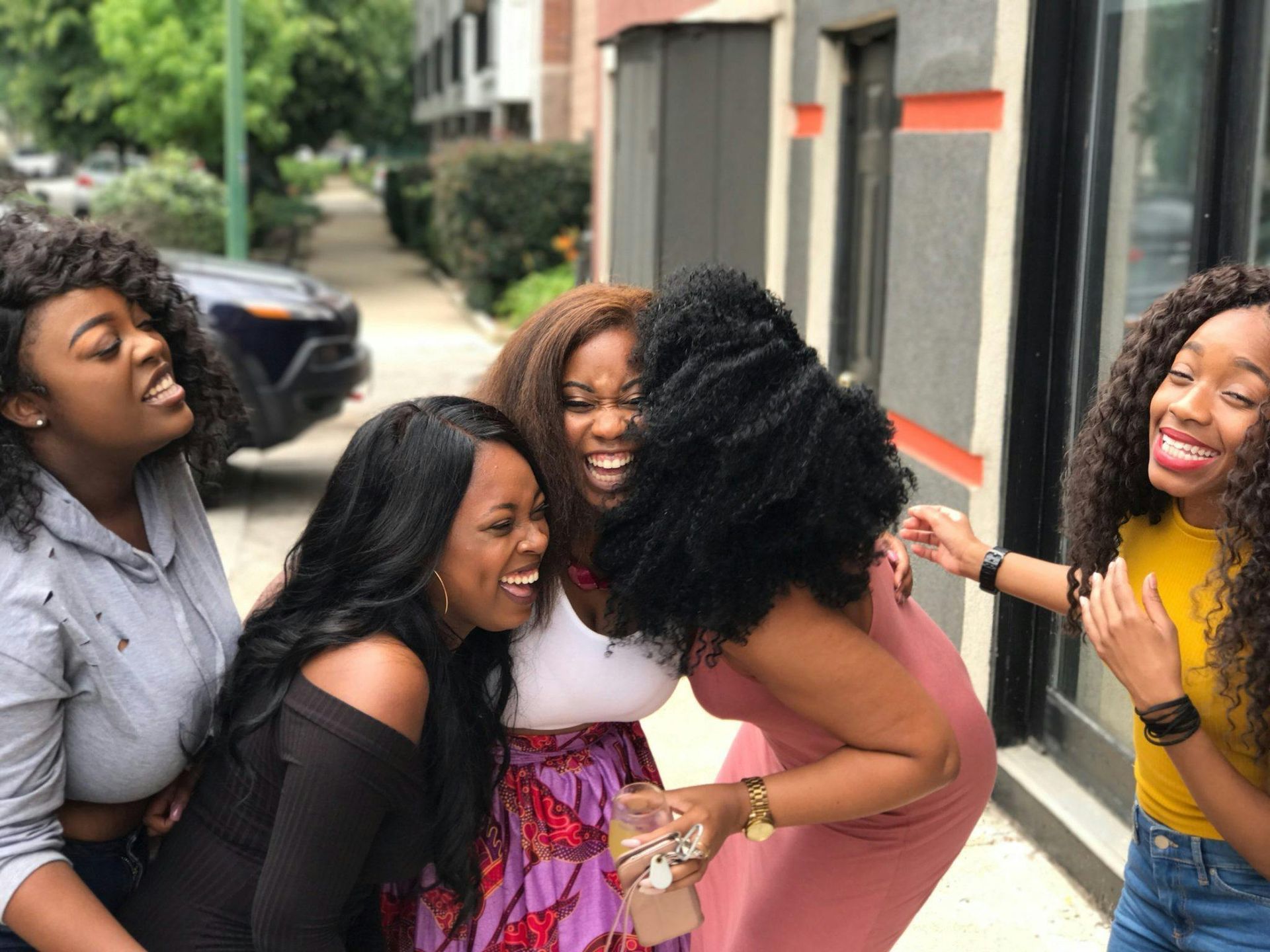
Five women laughing and embracing outdoors.
June 7, 2026
High-energy seasons are often celebrated as joyful, social, and productive. Longer days. Full calendars. More connection. More visibility. Yet for many women of color, these same seasons can quietly activate anxiety, emotional overwhelm, and exhaustion. This response isn’t a personal shortcoming. It’s the nervous system responding to stimulation after long periods of adaptation and survival.

Woman with curly hair lying outdoors, hands on chest, eyes closed. Wearing black tank top.
May 7, 2026
Mindfulness is often misunderstood as a practice of calm or positive thinking. In reality, mindfulness is about relationship—how we relate to our thoughts, emotions, and bodily sensations, especially when they feel uncomfortable. For many, old emotional wounds were formed in environments where feelings had to be managed quietly, quickly, or alone. Mindfulness offers something different. It creates space to notice what’s present without rushing to change it. Healing doesn’t begin with fixing. It begins with awareness.
April 7, 2026
For many women of color, survival wasn’t a phase—it was a requirement. Staying alert. Staying adaptable. Staying strong. These patterns often formed early, shaped by environments where emotional safety was uncertain or inconsistent. Survival mode once served a purpose. It protected you. But when it becomes a long-term state, the body and nervous system can struggle to recognize when it’s safe to soften. Spring is often associated with growth and momentum. Yet for those whose nervous systems are used to bracing, growth can feel destabilizing rather than exciting. This season offers an invitation to shift not through force, but through regulation.
March 7, 2026
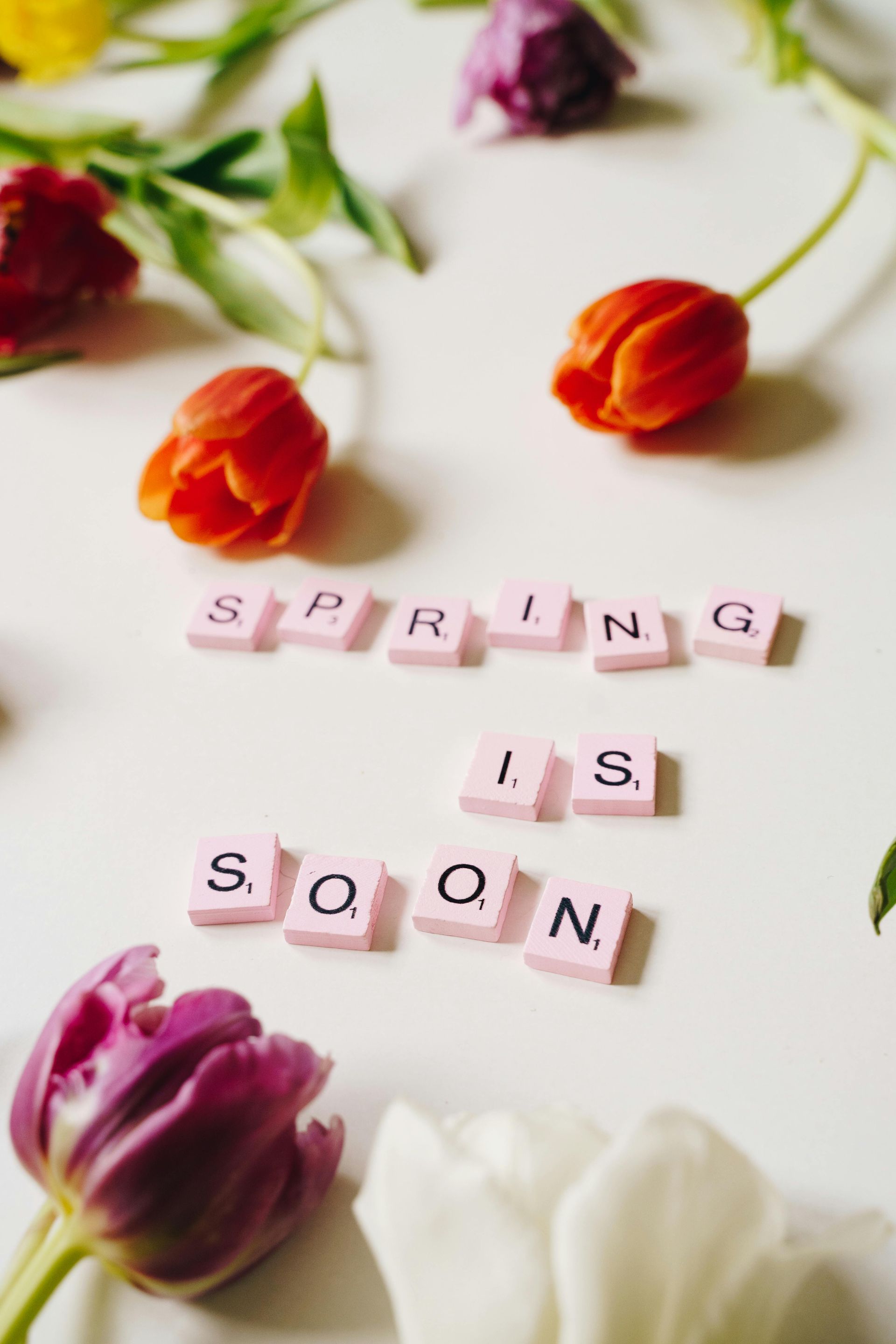
Spring is often framed as a season of productivity and fresh starts. New goals. New habits. New versions of ourselves. But true renewal doesn’t begin with adding more—it begins with letting go. Emotional clutter tends to accumulate quietly over time. It shows up as unspoken expectations, inherited responsibilities, survival strategies learned early, and beliefs formed in moments when safety was uncertain. These patterns don’t disappear just because the season changes. They live in the body, the nervous system, and the way we move through relationships. Spring offers something different than pressure. It offers permission.

Woman in beige top meditating with eyes closed in front of a white brick wall.
February 7, 2026
Grief is not only about loss through death. It lives in unspoken disappointments, unmet needs, abandoned dreams, and versions of ourselves that never had the chance to emerge. Grief has often been carried quietly—absorbed into responsibility, strength, and forward motion. Emotional release becomes healing when grief is finally allowed space, language, and compassion.
Show More